
Joe Orton’s Islington Library Vandalism: The Prank That Landed a Playwright in Prison
60s playwright Joe Orton and his partner were made an example of, following an elaborately creative protest against theirlocal library.
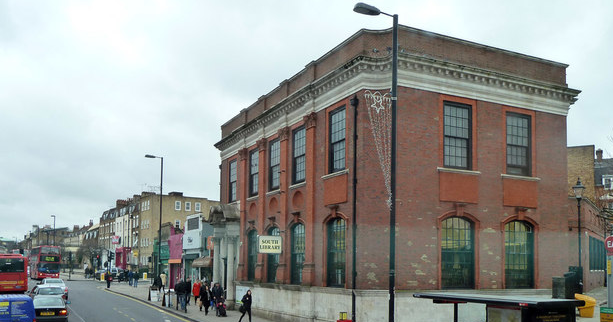
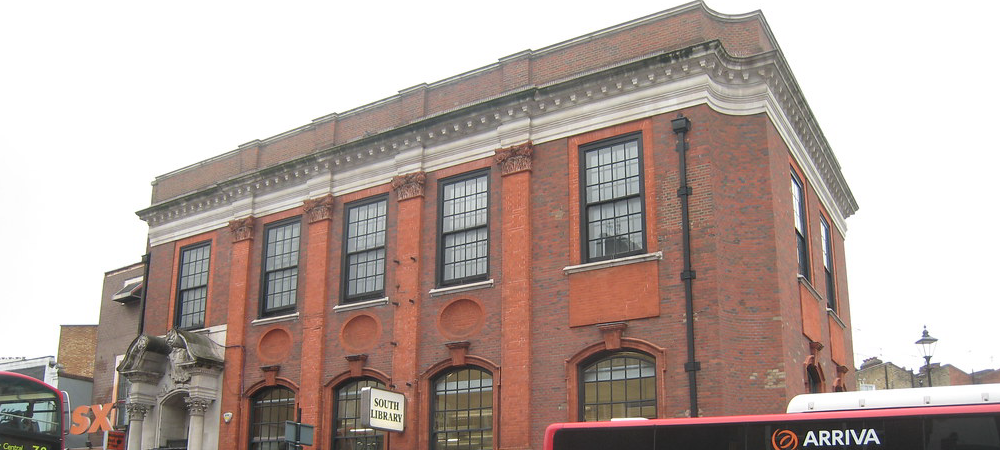
On Essex Road in Islington stands a grand Victorian building that looks slightly out of place amongst its neighbours. Red bricks with sturdy stone pillars flanking wooden doors, and a stone crest above. This is Islington South Library, and in the early 1960s it became the unlikely battleground for one of British literature’s most audacious pranks.
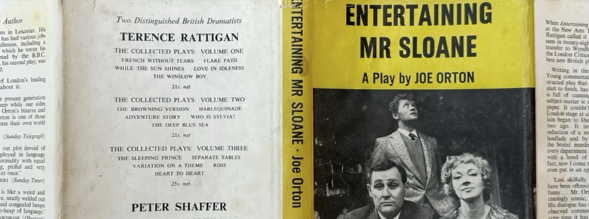
Between 1959 and 1962, playwright Joe Orton and his partner Kenneth Halliwell waged a campaign of cultural sabotage against Islington’s libraries. They stole books, and smuggled them home. From there, they decorated dust jackets with outrageous collages, wrote obscene fake blurbs, and surreptitiously returned them to the shelves. A biography of John Betjeman sported an elderly tattooed man in trunks. The Collins Guide to Roses featured a baboon. Dorothy L. Sayers mysteries were described as “at her most awe inspiring, at her most queer, and needless to say, at her most crude!”
The real thrill wasn’t just creating the alterations. It was watching unsuspecting library patrons discover them. “I used to stand in the corners after I’d smuggled the doctored books back into the library and then watch people read them,” Orton recalled. “It was very fun, very interesting.“
The prank ended with both men in prison for six months. But it revealed the instinct that would make Orton one of Britain’s most celebrated playwrights. He had a genius for shocking the genteel middle classes by turning their own cultural institutions against them.

The Campaign Begins
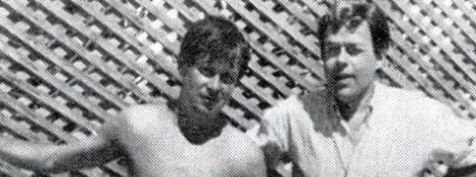
Joe Orton and Kenneth Halliwell lived together at 25 Noel Road in Islington, a few streets from Essex Road. Both aspired to be writers, though by 1959 neither had achieved success. Their flat was cramped, their prospects uncertain, and their local libraries stocked what they considered an appalling selection of mediocre books.
Rather than simply complain, they decided to intervene.
Starting in 1959, they began stealing books from Islington’s libraries. At least 36 books worth £23 from the Essex Road location, at least 36 more worth £25 from the Holloway Road library, and another 6 from Hampstead Central Library (whose building now houses one of London’s most underrated cultural hubs, Camden Arts Centre). They smuggled the books home, altered them, and returned them to the shelves.
The alterations were methodical and increasingly elaborate. They created false dust jackets using collage techniques, cutting images from magazines and art books and reassembling them into surreal compositions. The Three Faces of Eve got an adorable kitten. Agatha Christie novels were decorated with giant cats. The Collected Plays of Emlyn Williams suddenly included works titled “Knickers Must Fall” and “Fucked by Monty.”
The fake blurbs were equally outrageous. One Sayers mystery advised readers to enjoy it behind closed doors “and have a good shit while you are reading!”
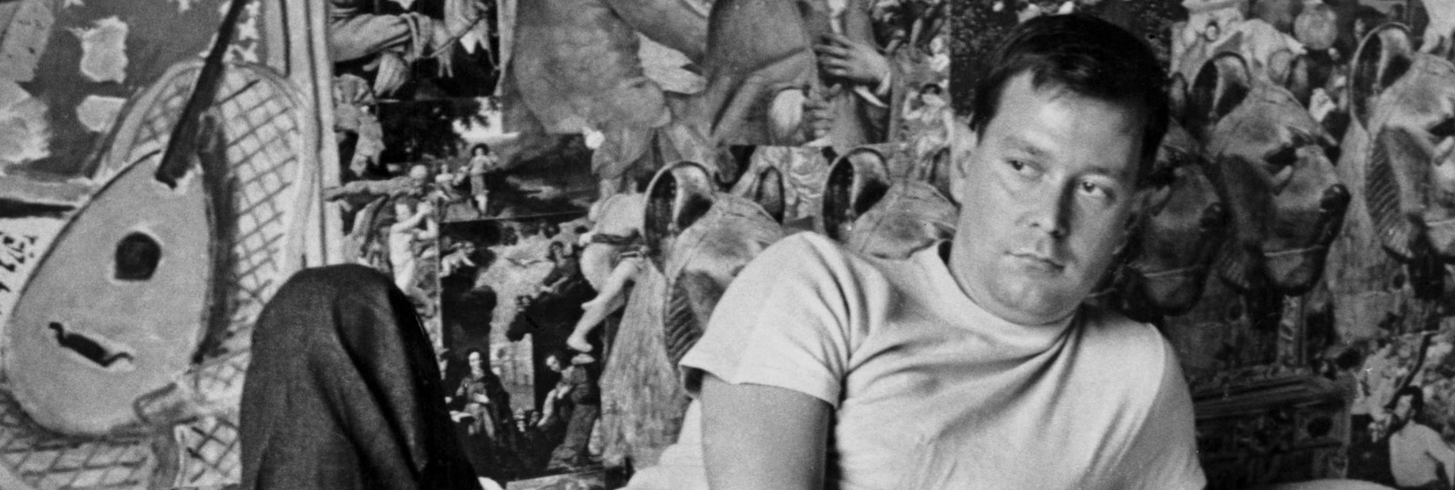
They also stripped plates from art books to cover the walls of their Noel Road flat. Eventually, police would find over 2,000 art plates papering their living room from ceiling to floor, creating an unbroken expanse of illustration.
Sidney Porrett’s Mission
For over two years, Orton and Halliwell operated undetected. Library staff noticed the doctored books appearing on shelves, but identifying the culprits in a busy central library proved nearly impossible. Too many readers, and no way to observe individuals closely enough.
Then Sidney Porrett got involved. Islington Council’s principal law clerk, Porrett made catching these “literary vandals” his personal mission. His language about his quarry dripped with the homophobic sarcasm typical of the era: “I had to catch these two monkeys. They were a couple of darlings, make no mistake.“
Porrett called in Detective Sergeant Henry Hermitage, known as “The Hermit.” Hermitage spent months working undercover as a Saturday librarian, observing readers and narrowing his list of suspects from eighty to ten.
The breakthrough came when operations shifted from the central library to a smaller branch location. With less traffic, staff could observe individual readers more closely. A librarian noticed two men who always visited together, shared the same address, and seemed to be present before doctored books appeared on shelves.
Suspicion centred on Orton and Halliwell. But suspicion wasn’t proof.
The Typewriter Trap
Police devised an elaborate sting. They sent Orton and Halliwell a letter about an illegally parked car outside their flat. The letter was calculated to provoke a response.
Halliwell fired back an incandescent typed reply, lambasting the council’s petty-mindedness and pointing out they didn’t even own a car. His furious defence revealed exactly what police needed: the typeface.
The forensic laboratory compared Halliwell’s typed letter with the typewritten text on the fake book blurbs. The typeface irregularities matched perfectly. Both came from the same machine.
Suspicion became certainty. Armed with a search warrant, two detective officers knocked on the door of 25 Noel Road on April 28, 1962.
The Raid
What police found inside the flat left no doubt they’d caught the right men. The living room walls were covered floor to ceiling with art plates stripped from books. Book jackets in various stages of alteration lay around the flat. Over seventy books from Islington libraries were present, though only eight had been properly checked out on library cards.
Police also found upwards of 1,600 loose plates removed from books, over a hundred of which could be immediately identified as library property by the rubber stamp on the reverse.
Orton gave a statement to police on April 28: “Over the last twelve months, we started to cut pieces out of these books and make false book jackets. I tried to make them as effective as possible by making it look like part of the book… I used to go back with them a couple of times a day.”
The Daily Mirror Breaks the News
Orton’s family in Leicester knew nothing about the arrest. They found out the same way most of Britain did: from a story in the Daily Mirror titled “The Gorilla in the Roses,” illustrated with the altered Collins Guide featuring a baboon.
Orton’s father William wrote to his son in prison on August 11, 1962. The letter, preserved in the Orton Collection at the University of Leicester, captures a working-class father’s bewilderment at his son’s incomprehensible crime:
“Dear John, I really do not know how to begin this letter for it has been such a long time since I wrote, and you have done such a stupid thing to land yourself where you are, still it’s no use crying over spilt milk its over with now, it was the most curious thing that I learned about it and you had not wrote and told us. I was watching a play or something on telly and happened to pick the Mirror up while the adverts were on, looked at a headline which read a Gorilla amongst the roses naturally I thought it was about gardening and then I got the shock and your Mum nearly went crackers for a day or two worrying about you, and then we got your letter. I can’t understand why you done it, you should have known you were bound to get caught in the end, and you certainly fell for the typewriter trick, still it could have been a lot worse I don’t think it’ll put you in the criminal class but for goodness sake John when you get back to your flat pack your Greek models or whatever you call them and find a new hobby… Well Cheerio John and no more foolish acts. Love from all at home.”
The letter is heartbreaking in its ordinariness. There’s a real struggle to fathom why his son would risk everything for a niche prank. The hope that this wouldn’t put John “in the criminal class” would prove sadly misplaced.
Old Street Magistrates Court
Orton and Halliwell were tried at Old Street Magistrates Court in Shoreditch. They were charged with stealing 72 books and removing 1,653 plates from art books. The magistrate described the fake blurbs as “mildly obscene” and decided to make an example of them.
The sentence: six months in prison and a fine.
Half a year for stealing and defacing library books?
A wildly disproportionate punishment. Or perhaps not, for two gay men living together in the 50s, creating sexually suggestive collages, and writing obscene parodies of respectable literature. The sentence wasn’t really related to books. Their ‘deviance’ was being made an example of. How dare Orton and Halliwell refuse to respect the cultural gatekeepers, or mock the idea of literary respectability?
The Unrepentant Artist
Orton discussed the incident years later in a 1967 interview with Barry Hanson: “I realise what I did was unforgiveable, I’m just unrepentant. But I objected to public money going on dull, badly written books under the heads of successful lady authors on the backs of their book jackets. I think one was written by Lady Dartmouth. The libraries had a tremendous amount of space for rubbish but none for good books.”
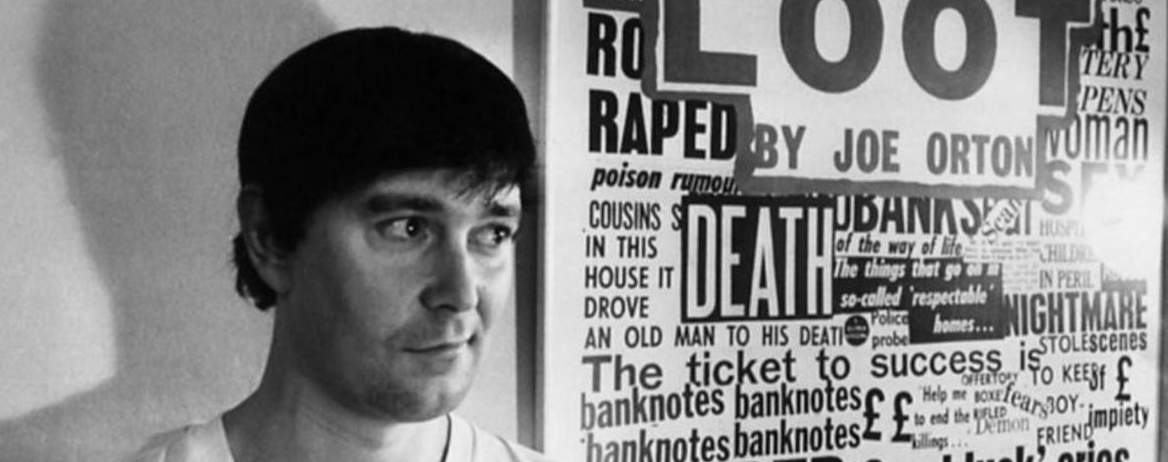
He never truly admitted his reasons at the time, but these acts of guerrilla artwork were an early indication of Orton’s desire to shock and provoke. He targeted the genteel middle classes, authority figures, and defenders of morality with the same savage wit he’d later bring to plays like Entertaining Mr Sloane, Loot, and What the Butler Saw. This extended to one of his most colourful creations – Aunt Edna – whose presence was in letter correspondences rather than the stage.
The library prank was a rehearsal for the theatrical career that would make him famous, and earn him the label “the Oscar Wilde of Welfare State gentility.”
Prison and After
The six months in prison proved transformative. Orton and Halliwell were separated for the first time in years. Orton later said the experience crystallised his understanding of authority, hypocrisy, and the absurdity of British respectability. The plays he’d write in the coming years would savage exactly the kind of petty officialdom that had sentenced him to jail for defacing books.
When they were released, they returned to the flat on Noel Road. The art plates were still on the walls. The Greek models his father had urged him to pack away remained. Five years later, in August 1967, Kenneth Halliwell would murder Orton in that same flat before taking his own life.
But in the years between prison and murder, Orton would write the plays that made him one of Britain’s most celebrated dramatists. And the instinct that drove the library prank—the urge to shock, to mock, to turn respectable culture into something obscene and hilarious—would define every word he wrote.
Islington South Library Today
The Victorian building on Essex Road still serves as Islington South Library. The sturdy stone pillars, the wooden doors, and the stone crest all remain. Inside, the books are presumably safe from guerrilla artists, though the story of what happened here in the early 1960s has become part of literary legend.
Standing outside the library today, you can imagine Orton and Halliwell emerging with books hidden under their coats, smuggling them home to Noel Road. You can picture them weeks later, slipping the altered books back onto shelves, then positioning themselves in corners to watch unsuspecting readers discover baboons on gardening guides and obscene advice on Dorothy Sayers mysteries.
It was performance art before the term existed, cultural critique disguised as vandalism. And it was, without doubt, Joe Orton discovering the transgressive, unrepentant voice that would bring him acclaim.
Explore Joe Orton’s Islington with Cobble
Download the Cobble app to walk through Joe Orton’s Islington, where his story unfolds in immersive audio as you stand on the streets where he lived, created, and committed the crimes that would land him in prison. Within walking distance of the library you’ll find CobbleGo stops at 25 Noel Road, where Orton and Halliwell doctored the library books and where the latter would condemn Orton – and himself – to a tragic end. There are nearby stops on Upper Street and near Highbury & Islington tube exploring some of his experiences in the area, as well as one at Clerkenwell County Court (which despite its name is in Islington too, seconds away from Noel Road) where Orton and Halliwell returned for their second trial. These all feature in ‘Almost Legal: Joe Orton & Queer 60s London’, our Joe Orton Collection, which draws on extensive research in the Orton Collection at the University of Leicester, and was developed in partnership with the Young Vic Theatre.
The collection is available year-round, part of Cobble’s broader exploration of LGBTQ+ London history, from Oscar Wilde to the organising of London’s first Pride marches.
On the Cobbles
Cobble Scene Location: Islington South Library, 115-117 Essex Road, Islington, London N1 2SL
Nearest Tube Stations: Angel (Northern line), Highbury & Islington (Victoria line, Overground)
Viewing: Library is open to the public during operating hours
Nearby Islington Attractions: 25 Noel Road (Orton’s home, private residence), Sadler’s Wells Theatre, Camden Passage antiques market, Old Street Magistrates Court (now Courthouse Hotel)
The Joe Orton Collection was researched at the Orton Collection at the University of Leicester and developed in partnership with the Young Vic Theatre. Explore Orton’s story of guerrilla art, cultural rebellion, and tragic genius with Cobble’s GPS-triggered audio walks throughout Islington.
A Straight Yes or No: Joe Orton, Edna Welthorpe, and the Heath Street Baptist Church
The playwright's creation wrote to a Hampstead Baptist church for a hall for a play about gay tolerance. She died. Then her aunt wrote.
In November 1958, the Reverend G.W. Sterry of Heath Street Baptist Church in Hampstead received a letter from a Mrs Edna Welthorpe – a fictional Joe Orton creation – requesting the church hall for three performances of a play called “The Pansy“, described as one which “pleads for greater tolerance on the subject of homosexuality.” Mrs Welthorpe did not exist. She was a persona invented by Orton, the most subversive playwright of his generation, who was then twenty-five years old and entirely unknown. The Reverend wrote back. Edna promptly died. Then, her...
moreHuntleys and Palmers: The Wolfenden Report and the Long Road to 1967
In 1957, the Wolfenden Report recommended decriminalising homosexuality in Britain. After ten more years, the law changed, but only so far.
In 1954, the British government appointed a committee to examine the law on homosexuality. For the sake of the ladies present at proceedings, homosexual men were referred to throughout as “Huntleys” and prostitutes as “Palmers“, after the biscuit manufacturer Huntley and Palmer. The resulting Wolfenden Report London would eventually recommend decriminalising homosexuality, but this wouldn’t occur for another decade. The chair of the committee was Sir John Wolfenden, vice-chancellor of Reading University, former headmaster of Uppingham and Shrewsbury,...
moreFive Stories from St Marylebone Parish Church
St Marylebone Parish Church has hosted a thirteen-year-old bride, the elopement of the century, and a christening so grim Dickens described it in a novel. Here's nine centuries of parish life.
St Marylebone Parish Church has stood on the New Road – now Marylebone Road – since 1817. Before that, three earlier versions occupied other spots around the neighbourhood, each one slightly more decrepit than the last. Over nine centuries of parish life, several things happened inside these buildings that the church website does not especially dwell on. Among them: a thirteen-year-old bride in cloth of silver, a painter’s satirical vision of organised religion’s complete collapse, the elopement of the century, and a christening so grim that the novelist who described...
moreThe World's Biggest Mugging: The City Bonds Robbery of 1990
In 1990, a messenger was mugged on a City of London alleyway and lost £292 million in bearer bonds, a Guinness World Record for the largest street robbery in history.
At 9.38am on 2 May 1990, a 58-year-old messenger named John Goddard walked down Nicholas Lane in the City of London, was stopped by a man with a knife, and surrendered his briefcase. Inside it were 301 bearer bonds worth £292 million. Goddard had no idea what he was carrying. The mugger jogged off into the rush-hour crowd. It was the largest street robbery in the history of the world, and it remains a Guinness World Record. Only one man ever went to jail for it. Bearer Bonds To understand how a single mugging on a narrow City alleyway became the largest street robbery in world history,...
moreThe Odious Swamp: Mary Shelley's Life in London After Percy
The author's London life after her husband's death saw Frankenstein credited, his heart held in a writing case, and thirty years of writing from grief.
In July 1822, the poet Percy Bysshe Shelley drowned off the Italian coast. He was twenty-nine. His wife Mary – author of Frankenstein, daughter of two of the most radical thinkers of the age – was twenty-four, a widow with one surviving child, and her dead husband’s heart wrapped in silk in her writing case. She brought all three back to England. She would live for another twenty-nine years – exactly as long as Percy had lived altogether – writing, grieving, and refusing, with some consistency, to remarry. The Odious Swamp In August 1823, Mary...
moreSwahili, Sanskrit, and the KGB: Academics and Adventurers at SOAS
The School of Oriental and African Studies has had Soviet intelligence officers, Cold War codebreakers, and Paul Robeson studying Swahili.
The School of Oriental and African Studies has always had a reputation for producing remarkable people. Some explored territories no European had mapped; some taught the world’s languages to codebreakers working in secret; some turned out to be Soviet intelligence officers living under borrowed names. The reputation for harbouring SOAS spies and adventurers was not entirely unearned, and the staff were, if anything, even more interesting than the students. Lao She and the Immigrant Novel Not everyone drawn to SOAS came in pursuit of adventure or empire. Some arrived from the...
moreHidden Worlds: The Brontë Family Portrait and the Brother Who Disappeared
The Brontë family portrait: lost for decades, found on a wardrobe in Ireland, and hiding a painted-out brother. It now lives at the National Portrait Gallery.
The only surviving portrait of the Brontë sisters was painted by their brother Branwell, folded up and lost for many years, rediscovered on top of a wardrobe in Ireland in 1914, and found to contain a hidden figure that nobody had noticed for another forty-three years. It now hangs in the National Portrait Gallery. Branwell is in it, just about. The story of how he got there, and how he almost didn’t, says something important about the family that produced three of the most enduring novels in English literature. A Rough, Common-Looking Painting The Brontë family portrait at...
moreThe Holy Experiment: William Penn, John Quincy Adams, and All Hallows by the Tower
London's oldest church has an unlikely American story. It baptised William Penn and married John Quincy Adams.
A Quaker who founded a colony as a “holy experiment” in religious tolerance was baptised here in 1644. A future American president married here in 1797, writing home two days later to introduce his new wife to his parents. All Hallows by the Tower, the oldest church in the City of London, has an unlikely thread running through the founding of America – and the story of that thread is stranger, and more complicated, than the blue plaques suggest. The Boy Baptised by the Tower William Penn was born on 14 October 1644 in the liberty of the Tower of London. His father...
moreThe Saddest Sight of Desolation: All Hallows by the Tower
Built in 675 AD, the capital's oldest church has survived a gunpowder blast, the Great Fire of London, and the Blitz.
The oldest church in the City of London has survived a medieval gunpowder explosion, the Great Fire of London, the Blitz, and several centuries of knife fights in its churchyard. It has sheltered sanctuary seekers and Knights Templar awaiting heresy trials, and gave Samuel Pepys a vantage point from which to survey the ruins of his city. All Hallows by the Tower is still standing. Everything around it, at various points, has not been. Older Than You Think All Hallows by the Tower stands on Byward Street, a few minutes from the river, in the shadow of the Tower of London. Its name...
moreHalt! Who Comes There? The Tower of London After Dark
Tower of London traditions: a King who walked in unchallenged, a bomb mid-ceremony, and a barrel of rum that must be drunk.
On the night of 29 December 1940, a German bomb fell on the Tower of London. The blast knocked the Chief Yeoman Warder clean off his feet. He got up, dusted himself off, and completed the Ceremony of the Keys. The ceremony had not been interrupted since Edward III invented it in 1340 after walking into his own fortress unchallenged one December night and deciding something ought to be done about it. The Tower’s traditions are like that: specific in origin, peculiar in detail, and apparently impossible to stop. The Ceremony of the Keys Every night at 9.53pm, the Chief Yeoman Warder...
moreSummer, Sunshine, Souvenirs: “I have come from the City and I bring you this small gift with a sharp point”
A guest post from Cobble historian Dr Victoria Fendel, exploring the excavations that uncovered Roman writing tablets, stylus pens, and the first written mention of London.
3 Queen Victoria street seems the site for skyscrapers. Nowadays you are glancing up at the ten-storey Bloomberg HQ peeking into the sky (fun fact, it is made of Derbyshire sandstone, not a local stone). Before 2010, you would have glanced up at fifteen-storey Bucklersbury house, London’s first tall slab after restrictions had been lifted on buildings above 30 metres in height after World War two. Both have made you look up, but the real treasure is below your feet. Where you are standing right now, excavations for the foundations of Bucklersbury House in 1954 already brought to light...
moreThe Rich and Famous at Quaglino's
For nearly 100 years, Quaglino's on Bury Street has been where London's royalty, aristocrats and entertainers came to eat, drink and cause scandal.
Bury Street runs off Jermyn Street in St James’s, a short walk from Piccadilly and a world away from the tourist London of the nearby parks and palaces. Number 16 looks discreet from the outside, and it always has. Since 1929, Quaglino’s has operated here as one of the most glamorous restaurants in Britain: a place where royalty, aristocracy, scandal, and heartbreak have all pulled up a chair. Twentieth-century London was not short of addresses where the rich and famous can mingle and lavish themselves on great food, such as the Gargoyle Club, for example. Still, Quaglino’s...
moreFull of Nits: Charles II, the Periwig, and the Tyranny of Fashion
Charles II brought the wig to London in 1660. Pepys found his full of nits. Judges still wear them. This is the Whitehall's periwig story.
In 1660, Charles II returned from exile at the French court and brought with him several things: a restored monarchy, an enthusiasm for mistresses, and the periwig. Within a decade, every self-respecting courtier in London was wearing one. Within two decades, Samuel Pepys had discovered his was full of nits. Fashion, as ever, demanded sacrifice. The King’s Wig The Banqueting House on Whitehall is the last surviving fragment of Whitehall Palace, where Charles II held court after his restoration in 1660. Years in exile at the French court of Louis XIV had given...
moreFull Gallop: Rotten Row and the People Who Rode It
Built due to a King's asthma, Rotten Row's story features Beau Brummell's eyebrow, and a man who drowned his horses in the Serpentine.
In December 1689, King William III ordered a road built through Hyde Park because his asthma couldn’t tolerate London’s smoke. He had it lit with three hundred oil lamps, making it England’s first illuminated highway. He called it La Route du Roi. Londoners called it Rotten Row. For the next two centuries, it was where the city went to be seen, to be judged, to fall off horses into the Serpentine, and occasionally to ride blind at full gallop. The King’s Asthma In December 1689, King William III and Queen Mary moved out of London to Kensington Palace on the...
more'Whither Thou Goest': Churchill, Roosevelt and the Special Relationship
The pair's relationship entailed a forgotten first meeting, Harry Hopkins weeping, and a bronze bench on Bond Street 50 years later.
In May 1940, Winston Churchill became prime minister and wrote his first letter to Franklin Roosevelt. They had met once before, at a banquet in 1918, but Roosevelt remembered the occasion and Churchill did not. It was not the most auspicious beginning for what would become the most consequential alliance of the twentieth century. Churchill spent the next five years trying to convince Roosevelt to save Britain. Roosevelt spent them trying to decide how far he was willing to go. Former Naval Person In October 1939, Franklin Roosevelt initiated a correspondence with Winston Churchill on...
moreChampagne, Dragons, and the Midnight Follies: Churchill at Downing Street
At 10 Downing Street, Churchill wore a dragon dressing gown and had champagne at lunch, midnight meetings, and a cigar he never actually smoked.
Winston Churchill spent most of the Second World War at 10 Downing Street, and he ran it on a schedule that no one else in Whitehall would have chosen. He worked in bed until noon, drank champagne at lunch, slept in the afternoon, and summoned his exhausted advisers to meetings at midnight. He wore a dressing gown emblazoned with dragons, flourished a cigar he never actually lit, and ran the war on his own clock. Whitehall had no choice but to keep up. The Dragon Dressing Gown Winston Churchill usually began the morning’s work in bed. Visitors summoned to 10 Downing...
moreThese Spartan Quarters: Churchill and the Cabinet War Rooms
Churchill's Cabinet War Rooms had sunlamps underground and sugar cubes in a drawer, plus a crater where he had walked twenty seconds earlier.
In March 1938, with war looking increasingly inevitable, a group of basement offices beneath a Whitehall building close to Parliament began their transformation into a secret underground headquarters. By August 1939, a week before Hitler invaded Poland, they were operational. For the next six years, the Cabinet War Rooms were where Britain’s war was run – by candlelight, under concrete, with chemical toilets and no flushing, mice in the walls, and staff who stripped to their underwear to stand in front of sunlamps. The Rooms The entrance to the Cabinet War...
moreRum, Sodomy and the Lash: Churchill at the Admiralty
Churchill's time at the Old Admiralty Building saw 150 flying lessons, three sea lords replaced, and the campaign that ended his career and killed 46,000 men.
In October 1911, Winston Churchill arrived at the Old Admiralty Building on Whitehall as the new First Lord of the Admiralty. Thirty-six years old, never having commanded a ship, he immediately replaced three of the four sea lords. What followed included 150 flying lessons, the modernisation of the Royal Navy for the First World War, and the Gallipoli campaign, one of the worst military disasters in British history. The quote about rum, sodomy, and the lash? He never said it. He wished he had. Crossing the Floor Churchill arrived at the Admiralty via a career already marked by dramatic...
moreThe Evil, Frightful Rooms: Karl Marx on Dean Street
At 28 Dean Street, Karl Marx lived in a smoky attic above what is now Quo Vadis. A spy took notes. Children died. Das Kapital got written.
Above the entrance to Quo Vadis – one of Soho’s smarter private members’ clubs, draped in Union flags – a blue plaque marks the years that Karl Marx spent in the two-room attic flat directly above where people now pay handsomely for dinner. The building has improved considerably. The Spy at the Kitchen Table One afternoon in the early 1850s, a man called Schmidt arrived at the attic flat at 28 Dean Street. He introduced himself as a journalist. The Marx family welcomed him in, offered him a pipe, and talked. He took careful notes. His name was not Schmidt. He...
moreThe Most Popular Writer You've Never Heard Of: G.W.M. Reynolds
G.W.M. Reynolds outsold Dickens, wrote the Mysteries of London, and marched with the Chartists. And almost nobody remembers him.
George William MacArthur Reynolds was, by most measures, the most widely read author in Victorian England. He outsold Dickens. His newspaper reached 350,000 readers a week. His novel sold a million copies in ten years. He is almost entirely forgotten. This erasure is partly because Dickens called him a pander to the lowest passions of the lowest natures. As well as this, it’s down to Reynolds spending his career agreeing with Karl Marx about the ruling classes, which tends to affect one’s literary legacy. The Man Nobody Remembers G.W.M. Reynolds lost his father at eight and...
moreFrom Matisse to Nick Cave: The Remarkable Afterlives of 69 Dean Street
The Gargoyle had designs by Matisse, members including Woolf and Bacon, and an entrance lift that once dropped a future SNP leader.
The Gargoyle Club Soho occupied the upper floors of 69 Dean Street from 1925 until 1952. Its interiors were designed by Henri Matisse. Its members included Virginia Woolf, Francis Bacon, Dylan Thomas, Fred Astaire and Noël Coward. And its entrance was a rickety external elevator that once left a future leader of the Scottish National Party dangling in mid-air for half an hour. As private members’ clubs go, it had range. What David Tennant Wanted The corner of Dean Street and Meard Street, the small cobbled road that turns off the main strip, is now home to the Dean Street...
moreLiberté, Egalité, Overdraft: Napoleon III in London
Napoleon III lived in London three times, got his debts paid by a mistress, patrolled Mayfair with a truncheon, and left his bath very full.
Napoleon III spent more time in London than any French emperor really should have. He arrived as a runaway, lived like a monarch, patrolled the streets with a truncheon, got his debts paid by a mistress, and left in such a hurry that his landlord found his bath still full of water and his bed unmade. He would later rebuild Paris. First, he had to sort out the bath. Carlton House Terrace Charles-Louis Napoléon Bonaparte – nephew of Napoleon I, future Emperor of France – first came to London in 1831, aged twenty-two, having been exiled from France after the Battle of...
moreManly Composure: James Boswell's Downing Street Year
Boswell on Downing Street: gonorrhoea, an illegitimate son, a furious landlord. Lost for a century. Found in a castle.
In November 1762, a twenty-two-year-old Scotsman took lodgings in Downing Street and began writing everything down. His name was James Boswell. He wrote down the haggling over rent, the gonorrhoea, the illegitimate child, the landlord who called the watch on him for making noise, and the woman he accused of infecting him, while congratulating himself on his polite dignity throughout. The journal was thought lost for over a century. It turned out to be one of the great literary discoveries of the twentieth century. Fifty Lodgings James Boswell arrived in London in November 1762 with his...
moreThe Importance of Being Arrested: Oscar Wilde at the Cadogan Hotel
Oscar Wilde waited at Cadogan hotel when he could have fled. The police arrived, and he asked if he could have bail, to no avail.
On the evening of 5 April 1895, Oscar Wilde sat in Room 118 of the Cadogan Hotel and waited. He had time to catch the boat train to France. He could have lived there comfortably and safely, beyond the reach of English law. Instead he stayed. The police arrived at half past six. He asked if he could have bail. The inspector told him he didn’t think he could. The Decision The Cadogan Hotel sits on the corner of Sloane Street and Pont Street in Chelsea, its red brick facade curving around the intersection. The hotel was built in 1887, brand new when Oscar Wilde arrived there on...
moreA Constellation of Genius: The Trial of Giuseppe 'Joseph' Baretti
In 1769, Giuseppe Baretti stabbed a man on the Haymarket. His acquittal came via testimonies from Samuel Johnson and David Garrick and many more esteemed men.
On the evening of 6 October 1769, an Italian literary critic walked briskly up the Haymarket in London, was grabbed by the private parts by a woman in a doorway, struck her, was set upon by three men, stabbed one of them fatally, and was arrested. He was tried at the Old Bailey two weeks later for murder. His character witnesses were Samuel Johnson, Joshua Reynolds, Edmund Burke, David Garrick, and Oliver Goldsmith. He was acquitted. The Man in the Dock Giuseppe Baretti was an Italian literary critic, poet, translator, and linguist. After leaving Italy following a series of...
more'For What I Care, Publish It to the World': Nelson and Emma Hamilton
The duo's affair saw love letters from the Victory, a shared house with Hamilton's husband, and a last letter left unfinished at Trafalgar.
Horatio Nelson was Britain’s greatest naval hero, the man who won the Battle of Trafalgar and died doing it. He was also a man who burned with love for a woman who was not his wife, fathered a child he could not publicly acknowledge, and spent years at sea writing letters that read like nothing a naval officer was supposed to write. Nelson’s Column stands in Trafalgar Square. The letters are somewhere else. Two Marriages Horatio Nelson married Frances Nisbet in 1787. They had met on the West Indian island of Nevis, where she had grown up in warmth and comfort....
more'I'll Soon Cure Ye': Elizabeth Calloway and the Cecil Court Fire
Thirteen houses burned, the Prince of Wales directed the firemen, Hogarth's mother died of fright, and the suspect was acquitted.
On the night of 11 June 1735, a fire broke out in Cecil Court, a narrow alley off St Martin’s Lane. By 3am, thirteen houses were gone. The Prince of Wales had arrived to direct the firemen. William Hogarth’s mother had died of fright. And a woman named Elizabeth Calloway was on her way to Newgate, charged with setting the whole thing deliberately. Cecil Court Cecil Court runs between St Martin’s Lane and Charing Cross Road, a narrow passage of the kind that defined this part of London in the eighteenth century. In 1735, it was home to a dense cluster of lodging...
moreAs Honeymoons Go, It Had Room for Improvement: Sarah Forbes Bonetta at Burton Crescent
A Yoruba princess, who was also Queen Victoria's goddaughter, honeymooned in Bloomsbury. But the house caught fire. Twice.
Sarah Forbes Bonetta was born Omoba Aina in a Yoruba village in what is now Nigeria, captured as a child after a raid that killed both her parents, gifted to a British naval officer along with a keg of rum and ten heads of cowries, presented to Queen Victoria at Windsor Castle, sent to Sierra Leone, returned to England, introduced into Victorian society, married at St Nicholas’ Church in Brighton, and arrived in Burton Crescent – now Cartwright Gardens – for her honeymoon. One week later, the house caught fire. Twice. Omoba Aina Sarah Forbes Bonetta was born...
moreWe'll Gather Lilacs: Ivor Novello at the Aldwych
Ivor Novello lived above the stage at the Aldwych for 40 years. His life was alive with parties, musicals, Hitchcock, and possibly a tryst with Winston Churchill.
Ivor Novello lived in a top-floor flat above the Strand Theatre for nearly forty years. He wrote some of the most beloved musicals in British history. He was, as his biographer put it, a consummate flirt who collected lovers as he gathered lilacs. And he may or may not have slept with Winston Churchill. When he died in 1951, 7,000 people attended his funeral. Women outnumbered men fifty to one. The Flat The Novello Theatre on the Aldwych was opened in 1905 as the Strand Theatre and renamed in 2005 in honour of Ivor Novello, who lived in the top-floor flat above the...
more'It Literally Reeks of Blood': The Black Museum at Scotland Yard
The Black Museum, Scotland Yard: wolf's bane, tanned skin, a murderer's apple. London's most disturbing collection, kept hidden from the public in a cellar since 1875.
In 1875, a police inspector founded a museum of crime in a cellar beneath Scotland Yard. It housed weapons, clothing, preserved body parts, a poisoner’s capsule of wolf’s bane, a piece of tanned human skin, and a wizened apple with human teeth marks from an unsolved murder. A reporter visited in 1887 and described it as not a large place, and not a particularly sweet one. He was understating things considerably. The Cellar The Black Museum came into being in 1875, when Inspector Percy George Neame gathered evidence from various crimes and displayed it in an Old Scotland...
moreThe Wickedest Woman in London: Kate Meyrick and the 43 Club
The 43 Club's owner went to prison five times, paid off corrupt police, and came out to cheering crowds in evening dress.
Someone once wrote to the police to warn them about Kate Meyrick. She was, the letter said, “the wickedest woman in London.” She had been to prison four times, was openly laughing at the law, and was paying off a sergeant by the name of Goddard at a rate of several hundred pounds a week. The letter was not wrong on any of these points. Fifty Pounds for a Partnership In 1919, Kate Meyrick was sitting at home nursing her daughter through influenza when she saw an advertisement in the newspaper. Someone was offering fifty pounds for a partnership to run tea dances. She replied...
moreThe Old Art of Abuse: Peter Cook and the Establishment Club
In three years, Peter Cook's uncensored cabaret launched careers, infuriated the Home Office, and was robbed blind. It was worth it.
In 1961, Peter Cook opened a comedy club in a former strip club in Soho, beneath a satirical magazine’s office, and next to a photography studio where one of the decade’s most notorious photographs would shortly be taken. He chose the location for its seediness. He called the club the Establishment. The irony was entirely intentional. Why Soho, Why Now The building at what is now 18 Greek Street has had a complicated life. It began as a soap warehouse, became a Chartist meeting hall, then a film studio with Soviet connections, and then Club Tropicana, an all-girl strip revue...
morePeg Woffington, a 'Spinster' in Soho?
One of the most celebrated performers of her age, Irish actress Peg Woffington refused to let marriage define her.
Dean Street runs through the heart of Soho, a district still full of theatres. From at least 1740 until 1748, number 78 was home to the Irish actress Margaret Woffington, known to everyone as ‘Peg’. She was, by that point, one of the most talked-about performers in London. She was also a woman who refused to marry, kept control of her own money, and lived as she chose in full public view, at a time when that required considerable nerve. As unconventional as the neighbourhood itself, this is the story of Peg Woffington. Humble Beginnings She was born in Dublin, probably...
moreThe Man Who Built Aligarh: Sir Syed Ahmed Khan's Seventeen Months in Bloomsbury
In 1869, Sir Syed Ahmed Khan spent seventeen months at 21 Mecklenburgh Square, Bloomsbury. He left with a plan that would reshape Muslim education in India for generations.
Mecklenburgh Square lies on the eastern edge of Bloomsbury, quieter than its more famous neighbours, its garden enclosed by late Georgian terraces. A plaque on the facade of number 21 marks the residence of Sir Syed Ahmed Khan from 1869 to 1870. Khan arrived in London in May 1869, stayed for seventeen months, and returned to India with a plan that would reshape Muslim education on the subcontinent for generations. He was also, at various points in his life, condemned as a traitor to his faith by orthodox theologians, distrusted as too close to the British by Indian nationalists, and...
moreA Shrine of Byzantium in Soho: The Greek Church in Hog Lane
In 1677, Greek Orthodox refugees built London's first Greek church on what is now Charing Cross Road. Here's the story of Archbishop Georgirenes, the Popish Plot, and the community that left its name on Greek Street.
Charing Cross Road runs south from Oxford Street through the heart of the West End. Nothing at 107–109 Charing Cross Road, now occupied by Foyles, indicates what once stood here. But in 1677, in what was then a half-built district of raw brick on the northern edge of London, a group of Greek Orthodox refugees raised a church on this spot. They had fled the expanding Ottoman Empire and had petitioned the King. What they built did not last long. But its story – one of displacement, ambition, and scandal – is a remarkable episode in Soho’s long history of immigration. The...
moreThe Most Intimate Job in England: The Groom of the Stool
For four centuries, the Groom of the Stool held the most intimate - and most powerful - position at the English court.
Buckingham Palace, which stands at the end of The Mall, is one of the most recognisable buildings in the world. From the 1660s until it became a royal palace, the site belonged to the Earls of Arlington. Arlington House was home to Isabella van Nassau, Countess of Arlington, a Groom of the Stool to Queen Catherine of Braganza. Why was this noblewoman attending to the monarch’s bowels, and why did it help her become one of the most influential women at the court of Charles II? The role involved attending the queen in her most private bodily functions, and yet it carried the right to...
moreThe Shim Sham Club: How Soho Got Its First Taste of Harlem
The Shim Sham Club brought Harlem to Soho in 1935. The police took notes. The neighbours wrote poison pen letters. The music won.
In 1935, a basement on Wardour Street brought Harlem to London. The Metropolitan Police took detailed notes. Anonymous neighbours wrote letters to Scotland Yard. A sergeant questioned the musicians about their wages. But none of it worked. The Shim Sham Club was London’s first Black-led music venue, and it was going to do what it liked. London’s Miniature Harlem The dark green-fronted building at 37 Wardour Street sits in the heart of Chinatown, in the southern part of Soho. In 1935, its basement housed something unprecedented in Britain. Jewish entrepreneur Jack Isow,...
moreThe Fascists Upstairs: Mussolini's Party in the Heart of Soho
In 1932, Mussolini's Fascist Party set up its London headquarters above a waiters' cooperative on Greek Street.
In the 1930s, the second floor of a waiters’ cooperative on Greek Street housed the London headquarters of Mussolini’s Fascist Party. Downstairs, Italian waiters clocked in and out. Upstairs, the Fascio di Londra distributed propaganda, organised the community, and plotted to take over Soho’s café industry. The espresso machines kept hissing. Nobody talked about the second floor. Little Italy’s Secret Soho was the heart of London’s Italian community: some 20,000 strong by the 1930s, concentrated in the streets around Greek Street, Old Compton Street, and...
moreWilliam Blake - 'An Unfortunate Lunatic' in Soho?
William Blake was born above a hosiery shop on Broadwick Street in 1757. He saw visions, survived the Gordon Riots, and held an exhibition nobody attended.
Broadwick Street runs through the middle of Soho, lined with the usual modern mix of offices and restaurants. William Blake House now stands at Number 62, a sixteen-storey tower block erected in the 1960s after the original building was demolished. A plaque at the entrance to the block and a note at nearby Marshall Street are all that mark the spot. It is not much of a memorial for the man the building is named after, the prolific artist and writer of Jerusalem. He was born here on the 28th of November 1757, in the upstairs rooms of his father’s hosiery shop at what was then 28...
moreFanny Hill and the Streets That Made Her
John Cleland wrote Fanny Hill in debtors' prison in 1748 as a dare. It became Britain's first pornographic novel.
In 1748, a man sitting in a debtors’ prison wrote Britain’s first pornographic novel as a dare. He published it, got arrested, formally renounced it, and spent the rest of his life in poverty insisting it was a hymn to virtue. The novel outsold almost everything else published that century. John Cleland never saw the money. The novel was Fanny Hill. The setting was Covent Garden. Long before Soho claimed the title, Covent Garden was London’s original pleasure district, the city’s great neighbourhood of brothels, theatres, coffee houses, and spectacularly bad...
moreGod, Guilt, and the Streets of Soho: William Gladstone's Secret Life
William Gladstone spent evenings rescuing Soho prostitutes, flogging himself in penance, and being blackmailed for a job at Inland Revenue.
William Gladstone was Prime Minister four times, a towering Victorian moralist, and a man who spent his evenings walking the streets of Soho and Covent Garden persuading prostitutes to come home with him. His wife Catherine would give them a meal, some advice, and a bed for the night. The bed, it should be clarified, was not to be shared. Gladstone kept meticulous records of every encounter in his diary, using a small symbol of a whip to mark the occasions when he felt he had become excessively excited. He then whipped himself. This was not, even by Victorian standards, entirely...
moreThe Raymond Revuebar: Soho's World Centre of Erotic Entertainment
From 1958 to 2004, the Raymond Revuebar operated in Soho. Paul Raymond called it the World Centre of Erotic Entertainment.
If you look up at the building to the right of Soho’s Original Adult Store on Walker’s Court, you can still make out the old sign built into the brickwork: “the world’s greatest names in Strip Tease.” It is all that remains of the Raymond Revuebar, which from 1958 to 2004 operated at this address under its self-proclaimed title of “The World Centre of Erotic Entertainment.” The Revuebar was many things – ludicrous, audacious, occasionally prosecuted – but modest was never one of them. The King of Soho Paul Raymond was...
moreThe Wrong God at Piccadilly Circus
Everyone calls it the Eros statue. It isn't. The figure at Piccadilly Circus is actually Anteros, and the artist who made it wanted it demolished.
Everyone calls it the Eros statue. It is not Eros. It never was. The winged figure at the centre of Piccadilly Circus is Anteros: Eros’s brother, a symbol of selfless and mature love rather than reckless passion. The mix-up has persisted for over 130 years, and at this point nobody is correcting it. London looked at a statue of measured, reflective affection and decided it was the god of getting off with people. Not What You Think The Shaftesbury Memorial Fountain went up on 29 June 1893 to commemorate Anthony Ashley Cooper, the 7th Earl of Shaftesbury, a politician and...
more'Who's That Rare and Radiant Maiden?' - The Short Life of Nelly Moore
In 1869, Soho Square lost one of its most remarkable residents. Nelly Moore, one of the most promising actresses of her generation, was just 24 years old.
Soho Square sits at the northern end of Soho, a small public garden ringed by Georgian and Victorian buildings. Number 31 is hard to find today. It should be in the square’s South West corner, but there’s a gap – or rather a road: Frith Street – between 32 and 30, the NHS building that was formerly the home of celebrated Victorian actress Fanny Kemble. 31 was the abode of another Victorian actress. The actress Nelly Moore lived there in the 1860s. Beautiful and talented, she taught Sunday school at nearby St Anne’s, worshipped at the same church, and by all...
more'Anti-Espresso' and Anti-Nuclear: the Partisan Coffee House
A coffee house on Carlisle Street in Soho was the intellectual centre of the British New Left, and a regular haunt of Special Branch.
Soho in 1960 At some point in the late 1950s, officers from Special Branch began making regular visits to a coffee house on Carlisle Street, a narrow turning off Soho Square. They would sit down, order a drink, and play chess. They were listening. The conversations happening at number 7 were considered worth monitoring at the highest levels of the British state. The place was called the Partisan Coffee House. It was open from half past ten in the morning until midnight, it served famously mediocre filter coffee, and between 1958 and 1962 it was the intellectual centre of the British New...
moreThe Tower of London's Ravens: A Very Victorian Myth
The Tower's ravens have guarded the fortress for centuries, or so the (invented) legend goes...
Ravens at the Tower of London. The raven enclosure sits within the Tower of London’s inner ward, a short walk from the White Tower. Six ravens live here at any given time, tended by a keeper with the title of Ravenmaster. Tourists photograph them. Tour guides invoke them. The legend is everywhere: if the ravens ever leave the Tower, both the fortress and the kingdom will fall. King Charles II was so alarmed by the prophecy that he ordered the birds protected, even at the expense of his astronomer John Flamsteed, who complained that they were disrupting his observations of the night...
moreThe Man Who Tried to Steal the Crown Jewels
In 1671, Thomas Blood tried to steal the Crown Jewels from the Tower of London. He dressed as a parson, nearly pulled it off, and the king pardoned him.
The Martin Tower at the Tower of London. The Martin Tower is not the Tower of London’s most impressive structure. It is squat and circular, 39 feet high, built from Kentish ragstone in the 1230s. For most of its history it served as a storage room, a prison, and a set of lodgings. For 172 years, it also held the Crown Jewels of England. On the morning of 9 May 1671, it came within nine minutes of losing them. A New Set of Jewels for a New King The Crown Jewels that Thomas Blood attempted to steal were themselves relatively new. In 1649, Parliament ordered the original...
moreThe Peasants' Revolt and the Tower of London: Farm Tools Beat a Fortress
In 1381, 10,000 rebels breached the Tower of London with farm tools. The guards let them in. A 14-year-old king rode out alone to face them.
The outer walls of the Tower of London were built to be impregnable. Edward I spent the equivalent of over £11 million today transforming the fortress into the strongest castle in England. Successive kings reinforced its walls, deepened its moat, and multiplied its towers. The Tower had never fallen. It would not fall to an army. As it turned out, all it took was an open gate and a distracted teenager. On 14 June 1381, the Peasants’ Revolt breached it anyway. Not with siege engines or battering rams. With farm tools, righteous fury, and the quiet cooperation of the guards...
moreJuliet at Twenty, Abolitionist at Fifty: The Extraordinary Life of Fanny Kemble
Fanny Kemble saved Covent Garden Theatre from bankruptcy in 1829, then spent decades fighting to publish her devastating account of slavery.
Number 29 Soho Square sits on the north side of the square, a few minutes’ walk from the noise and colour of Oxford Street. These days it’s an NHS walk in centre, and has been in the medical game for a while. A large engraving on the top of the building reads ‘The Hospital For Women, Supported By Voluntary Contributions‘. Before that part of its history though, this site housed a woman whose own voluntary contributions provided a form of support to a large cohort. Her name was Frances Ann Kemble. The world would come to know her as Fanny. Born Into the...
moreDigital Dave: The April Fool That Caused an International Incident
In 1980, the BBC announced Big Ben was going digital and would be renamed Digital Dave. The world was not amused.
At the northern end of the Palace of Westminster, the Elizabeth Tower rises above the Thames and the rooftops of Westminster to a height of 96 metres. Most people call it Big Ben, though technically that name belongs only to the great bell inside. Stand at its base on a clear day and you can hear the chimes carry across the river. In homes and offices across the world, those same chimes have marked the hour on BBC broadcasts for nearly a century. On 1 April 1980, the BBC announced they were about to change forever. The Announcement The BBC’s Overseas Service – now the...
moreNine Days a Queen: Lady Jane Grey and the Tower of London
Lady Jane Grey was queen for 9 days. She spent the next 7 months in the Tower of London waiting to find out if she would live.
Inside the Beauchamp Tower, scratched low into the stone at knee height, is a single name: JANE. Someone carved it during the winter of 1553-54, probably Guildford Dudley, Jane Grey’s teenage husband, imprisoned here after his wife’s nine-day reign collapsed. It is not an inscription that announces itself. You have to know to look for it. The Tower of London is full of such traces – moments of desperation preserved in stone by people who had run out of other options. Few are as loaded as this one. The Girl Who Was Made Queen Lady Jane Grey was born in the...
moreThe Bishop, the Rope, and the First Escape from the Tower of London
In 1101, the Tower of London's first prisoner escaped through a window, using a rope hidden in a wine barrel.
The White Tower is the oldest and most imposing structure in the Tower of London complex. William the Conqueror built it in the late 1070s – a vast stone cube with four corner turrets, designed to loom over London’s low skyline. The message was unambiguous: there was a new king, and dissent would not be tolerated. For the first decades of its existence it was simply called the Great Tower, and it stood alone. The sprawling complex of walls, towers, and gatehouses that surrounds it today came later. Successors who understood what William had grasped immediately built it: walls this...
moreFor Bread and for Scotland: The Jacobite Executions on Tower Hill, 1746
On Tower Hill in 1746, one man died for bread and one died for Scotland. Two public executions on one day left two very different legacies.
The memorial in Trinity Gardens on Tower Hill sits on the approximate site of the old scaffold. Bronze plaques set into the ground record 27 names – politicians, nobles, rebels, and traitors who died here publicly, in front of crowds that sometimes numbered in the thousands. A central plaque notes that more than 125 people lost their lives on this spot “for the sake of their faith, country or ideals.” The 27 names represent only a fraction. Most who died here went unrecorded. Contrary to popular belief, most executions connected to the Tower of London happened...
moreSt Paul's Cathedral in the Blitz: One Photograph, Two Front Pages
Herbert Mason's famous photograph of St Paul's Cathedral during the Blitz ran on two front pages, with opposite meanings.
Herbert Mason’s famous photo of St Paul’s in the Blitz. The south face of St Paul’s Cathedral looks out over St Paul’s Churchyard, the pedestrianised square that wraps around the building’s base. Christopher Wren’s dome rises above it. Look up at the triangular pediment on this side of the building and you’ll find a carved phoenix, wings spread, rising from flames. Beneath it, a single Latin word: Resurgam. I shall rise again. It has had occasion to mean it. St Paul’s Cathedral has burned before. In 1666, the medieval...
moreThe Mummy's Curse: Death, Disaster, and the British Museum's Most Dangerous Exhibit
In the Egyptian Room at the British Museum sits a mummy case that has been blamed for lost limbs, multiple deaths, and - if one senior curator is to be believed - the First World War.
An illustration of the British Museum. Great Russell Street in Bloomsbury runs west to east past the vast neoclassical facade of the British Museum – 44 Greek-temple columns, a triangular pediment, those enormous steps leading up to the main entrance. Walk through the gates, cross the forecourt, and pass Westmacott’s carved allegory of human progress overhead as you enter one of the great repositories of human history. Tourists move in clusters. School groups trail behind their teachers. The Great Court hums with the sound of the world passing through. Some of what’s...
more'I Will Rise Again': How London Kept Rebuilding St Paul's Cathedral
Old St Paul's Cathedral burned, was struck by lightning, and had horses in its nave. The story of five cathedrals on one Ludgate Hill site.
St Paul’s Cathedral has a fire-filled history. Ludgate Hill rises gently from the heart of the City of London towards the west facade of St Paul’s Cathedral, the steps spilling down from the portico onto the churchyard below. The stone is worn smooth in places. Tourists cluster around the base of the steps. Office workers cut through on their lunch breaks. It looks, on most days, like a building that has always been here and always will be. That impression is not entirely wrong. A place of Christian worship has stood on this spot since 604 CE, longer than England has existed as...
moreSixty Thousand Books on Two Ships: The Warburg Institute's Escape from Nazi Germany to Bloomsbury
In 1933, an entire research institute crossed the North Sea, from Nazi Germany to London. This is the story of how Bloomsbury's Warburg Institute came to be.
The Warburg Institute on Woburn Square in Bloomsbury In December 1933, two small steamships called the Hermia and the Jessica sailed from Hamburg to London carrying an unusual cargo. 60,000 books, 10,000 photographs, most of the furniture, and the entire staff of a research institute devoted to the study of images, memory, and the survival of the ancient world in modern life. The Nazis had come to power that year. Aby Warburg, the institute’s late founder, was Jewish and so were most of his colleagues. The director, Professor Fritz Saxl, had concluded that it was impossible to...
more'Uncollegiate-looking': UCL's Radical Secularism and the Wilkins Building
William Wilkins designed UCL's Gower Street portico in 1827 with no cross and no chapel, and sparked a debate about architecture and radical education that still resonates.
UCL’s Wilkins building At the north end of Gower Street in Bloomsbury, you’ll find University College London’s iconic neoclassical portico. With its ten Corinthian columns supporting an elegant dome, its been a local landmark since it first rose above the surrounding streets in the late 1820s. The building has a conventionality to it now – it smacks of university or institution – but in its early days its neoclassical style actually communicated something pretty radical. Without a cross, or a chapel, there is, in the words of one hostile critic, nothing...
moreLove, Friendship, and The London School of Medicine for Women
Sophia Jex-Blake opened Britain's first medical school for women in Bloomsbury in 1874. The remarkable women who built it lived extraordinary lives together.
The London Royal Free Hospital School of Medicine for Women The building that stands on the corner of Hunter Street and Handel Street, just off Brunswick Square in Bloomsbury, carries a stone inscription above its door: “London Royal Free Hospital School of Medicine for Women.” It was built between 1897 and 1900 by J.M. Brydon, on the site of earlier, more modest premises. That earlier building, a spacious, old-fashioned house with long rooms on the ground floor and a walled garden of unusual size for central London, was where, in October 1874, Sophia Jex-Blake opened the doors...
moreBenjamin Franklin and the Lightning Rods of St Paul's
In 1769, Benjamin Franklin was brought in to protect St Paul's Cathedral from lightning. What followed was a memorable royal scandal and a scientific feud.
Clouds gather over St Paul’s Cathedral. The west towers of St Paul’s Cathedral rise above St Paul’s Churchyard like a pair of sentinels, topped with gilded pineapples that catch the light on a clear day. They are, even by the standards of a city that has never been shy about reaching skyward, extraordinarily tall. And in the eighteenth century, extraordinarily tall meant extraordinarily vulnerable, especially to the one force of nature that no architect, however brilliant, had yet found a way to argue with. Lightning had destroyed entire cathedrals before. In 1764, a...
moreMartin Luther King Jr at St Paul's: The Sermon That Sparked a Movement
In 1964, Martin Luther King Jr preached to 4,000 people at St Paul's Cathedral, and sparked a movement that would change British race relations forever.
The steps of St Paul’s Cathedral spill down from a portico of paired columns onto St Paul’s Churchyard, the pedestrianised square that wraps around the building’s south side. Christopher Wren’s stunning dome looms above – the one that survived the Blitz, which you can see from half of London on a clear day. Tourists gather here in clusters. Office workers cut through on their lunch breaks. On most days, this part of the City of London is busy but unremarkable. On 6 December 1964, it was neither. That morning, more than 4,000 people filled the...
more'Brandy-Faced Nan': The Statue Outside St Paul's That Nobody Could Agree On
Queen Anne's statue outside St Paul's Cathedral has been mocked, attacked with a chopper, and lost for decades. It has an extraordinary story.
The Queen Anne statue at St Paul’s Cathedral. At the top of the steps of St Paul’s Cathedral, before you reach the great west doors, you’ll pass a statue. A queen in full regalia stands there, crown on her head, orb in one hand, sceptre in the other, gazing southward across St Paul’s Churchyard. Around her base sit four allegorical figures: Britannia with a trident, France with a helmet, Ireland with a harp, and America, depicted as a half-naked woman in a feathered headdress, her foot resting on a severed bearded head, with a lizard coiled behind it. The...
more'Our London was a Wilderness': How UCL Shaped Bloomsbury and Gordon Square
From a boggy building site to one of London's most celebrated neighbourhoods, UCL transformed Bloomsbury over two centuries.
Gordon Square, the heart of Bloomsbury and UCL. Gordon Square, at the heart of Bloomsbury, is built around gardens. The grassy enclosure’s benches, flowers and old trees make for a charming spot for students and passersby to enjoy London’s rare sunny days. Ringed by elegant Georgian houses, a church, and many of University College London’s buildings, it’s a tightly enclosed oasis. Yet it’s hard to imagine that this neighbourhood was barely built when UCL opened its doors just around the corner on Gower Street in the 1820s. The founders were mocked for their choice of...
more'How Was It That I Felt As If I Had Come Home?': Indian students at UCL
From Rabindranath Tagore to Madan Lal Dhingra, UCL's Bloomsbury campus shaped some of India's most notable figures whilst they were students.
Statue of Mahatma Gandhi in Tavistock Square, Bloomsbury Tavistock Square sits at the heart of Bloomsbury, enclosed by tall London brick terraces. In the middle of its central gardens, a bronze figure looks down from a stone plinth. It’s the nonviolent anti-colonialist Mahatma Gandhi. The ‘father of modern India’ was perhaps the most celebrated Indian student ever to attend the nearby University College London. When founded in 1826, UCL became the first English university to admit students who weren’t members of the Anglican Church, opening it up to men (and soon...
moreThe Places We Walk Past: Recovering Attention in an Age of Distraction
From virtual reality to location-based storytelling, the most meaningful technology may be the kind that deepens our attention to the places we move through every day.
A few years ago, after one of my regular walks to Regent’s Park, I realised I could barely recall a single building I had passed. I had taken a route I like through Bloomsbury and up into Fitzrovia, past Georgian terrace houses, cafés and university buildings whose façades I know well. I was walking quickly, earphones in, tracking my pulse and following a story or a political argument of the day. I had paid more attention to the voices in my ears and the numbers on my watch than to anything directly in front of me. The same thing had happened closer to home. I live a few minutes’...
moreDeath on Noel Road: Joe Orton, Kenneth Halliwell, and the End of a Partnership
The story of Joe Orton's tiny Islington flat, where he wrote his most celebrated plays, kept his notorious diaries, and met his end in 1967.
25 Noel Road, where Joe Orton lived, wrote and died. Walk along Noel Road in Islington, where the street runs parallel to the Regent’s Canal, and you’ll find number 25. It’s a Georgian terrace that looks much like any other on the street. Look up to the second floor and you’ll spot a pale green plaque from the London Borough of Islington, bearing the name Joe Orton. It is placed high on the building, easily missed, perhaps fitting for a man whose life outpaced his legend only after his death. This was Flat 4. Home to playwright Orton and Kenneth Halliwell from...
moreUCL or 'Cockney College': Just How Radical was London's First University?
University College London was founded to educate the 'middling rich, but found itself ridiculed by the establishment even before opening.
UCL’s main building. On Gower Street in Bloomsbury, University College London’s iconic façade overlooks the perpetual motion of student life, with lectures beginning, seminars ending, and ideas forming. UCL’s student body is one of the most diverse in the country. In a way that matters, it always has been. In 1828, England’s third university arrived in Bloomsbury with no royal blessing, no religious test, and no shortage of enemies. For centuries, the only universities in England were Oxford and Cambridge, ancient institutions where membership of the Church of...
moreJoe Orton Meets The Beatles: The Night Rock Royalty Came to Belgravia
The controversial playwright shared a notable evening with the Beatles' Paul McCartney and a number of other 60s pop icons at Brian Epstein's house.
24 Chapel Street in Belgravia, where Joe Orton and Beatles icon Paul McCartney met in 1967. Number 24 Chapel Street sits on a quiet Belgravia corner, all elegant white stucco and understated wealth. The sort of address where nothing scandalous could possibly happen. Except on the evening of 24 January 1967, when Britain’s most transgressive playwright sat down to dinner with the world’s biggest pop stars. Joe Orton arrived at Brian Epstein‘s house just before eight o’clock, having walked around the neighbourhood to avoid appearing too eager. He rang the...
moreW.B. Yeats, 'George', and the Unknown Writer in Bloomsbury: When a Nobel Prize Was Written by Spirits
The Irish poet's work was influenced by his wife's automatic writing sessions, during which she communicated with spirits from their Bloomsbury home.
There’s a certain kind of writer who believes their best work comes from somewhere else. The muse, the subconscious, divine inspiration. W.B. Yeats took this literally. For nearly 25 years, he lived on Woburn Walk in Bloomsbury, and during that time he became convinced that some of his finest poetry was being dictated by the spirit world. Whether you believe in spirits or not, the results are hard to argue with. Yeats won the Nobel Prize for Literature in 1923. And a significant portion of the credit, it turns out, belongs not just to the poet himself but to his wife Georgie...
moreJulia Margaret Cameron at the V&A: The Woman Who Started Photography at 48 and Changed It Forever
Cameron picked up the camera late, and her 'out-of-focus portraits' drew ire. But the V&A own over 850 Cameron photos, and she's still a photography giant.
The Victoria and Albert Museum holds over 850 photographs by Julia Margaret Cameron in its collections. This is remarkable for several reasons, but perhaps the most striking is that Cameron didn’t touch a camera until she was 48 years old. She had less than two decades to create a body of work that established her as one of the most influential photographers in history. She did it by ignoring almost everything professional photographers told her. Cameron worked in a converted henhouse, and created images so deliberately unfocused that the photographic establishment mocked her....
moreDorothy Richardson on Woburn Walk: The Woman Who Invented Stream of Consciousness Before Virginia Woolf
A lesser-known author pioneered one of modernist literature's key elements whilst living on Woburn Walk. But other writers - including one Bloomsbury counterpart in particular - have banked the credit.
On the picturesque Woburn Walk in Bloomsbury, there’s a blue plaque above the doors of numbers 6A and 8 commemorating Dorothy Richardson. Most people walking past have never heard of her. Those who have tend to think of her as a footnote in modernist literary history, someone who did something vaguely experimental before Virginia Woolf and James Joyce made it famous. This is profoundly unfair. Dorothy Richardson invented stream-of-consciousness narrative in English literature. She published the first volume of her experimental novel sequence Pilgrimage in 1915, before Woolf’s...
moreBloomsbury’s Suffragette Street: Lady Constance Lytton and the Community of Duke's Road
Lytton, who went under cover to show the women's suffrage debate was about class as well as gender, lived in Bloomsbury amongst sisters in the struggle.
Standing on Duke’s Road in Bloomsbury today, you’ll see St Pancras New Church and its caryatids on one side, and a pale-blue Premier Inn on the other. With apologies to the building’s architect and those running the day-to-day hotel operations, the Premier Inn appears functional and unremarkable. Nothing about it suggests that this site was once a terrace of modest flats where some of Britain’s most radical women planned their campaigns for the vote. Between 1910 and 1912, Lady Constance Lytton lived at number 15 Somerset Terrace, which once stood where the hotel now rises....
moreThe Bloomsbury Barrister Who Defended the Indefensible: Charles Phillips and the Ethics of Advocacy
Gordon Square was home to Charles Phillips, a firebrand barrister and anti-death penalty campaigner, who was defined by a controversial case and notorious execution.
Gordon Square sits at the heart of Bloomsbury, one of those elegant Georgian enclaves where the houses seem to breathe history. Number 39, with its pale brick façade and black number plate beneath the balcony, looks out over the central gardens. Its quiet, dignified, and, amidst many other beautiful Cubitt-style Bloomsbury dwellings, unremarkable at first glance. But Charles Phillips lived here from 1847 until his death in 1859, and by the time he arrived, he was already famous. Phillips was a renowned criminal barrister, a published poet, and a passionate campaigner against the death...
moreSenate House and the Ministry of Truth: How Bloomsbury Inspired Orwell's 1984
In George Orwell's defining novel, this towering university building - home to the Ministry of Information in World War 2 - was transformed into a centre of autocracy.
On Malet Street in Bloomsbury, the Art Deco tower of Senate House dominates this part of London. It rises high into the air, nineteen floors of Portland stone that seem to dwarf everything around it. The building looks like it belongs in a different city, something from Fritz Lang’s Metropolis or a fascist architect’s fever dream. George Orwell knew this building well. During World War II, it housed the Ministry of Information, where his wife Eileen worked and where the government controlled information being fed to the public, censoring news and producing propaganda....
more
The Tudor Tower of London: A Family-Friendly History Walk
Immerse the whole family in the Tudor history of the Tower of London with Cobble's audio walk.
“Mum, did Anne Boleyn really have six fingers?” “Dad, why did Henry VIII kill his wives?” “Is it true there’s a ghost?” If your family’s been watching The Tudors on Netflix, reading Hilary Mantel’s Wolf Hall, or your child’s studying the Tudors at school, you know the questions are endless. The challenge is moving from costume dramas and textbook diagrams to actually understanding what happened. The answer isn’t in a museum case or behind tower walls. It’s standing on the stones where Anne Boleyn landed, hearing the...
more
History's Real Traitors – Tower of London Immersive Audio Walk
Explore the chilling history of traitors at the Tower of London and their brutal fates during the Tudor century, with Cobble's immersive audio walk.
If you’re fascinated by betrayal, deception, and watching traitors at work – whether in reality TV or real history – the Tower of London’s Tudor century offers the original version. This wasn’t entertainment: it was political murder following a grimly predictable pattern. At the Tower Hill execution memorial, Thomas Cromwell was beheaded by the regime he’d built. Anne Boleyn was destroyed by the minister she’d promoted. Lady Jane Grey was abandoned by her own father after nine days as queen. Unlike reality shows where traitors get eliminated, at the Tower of...
more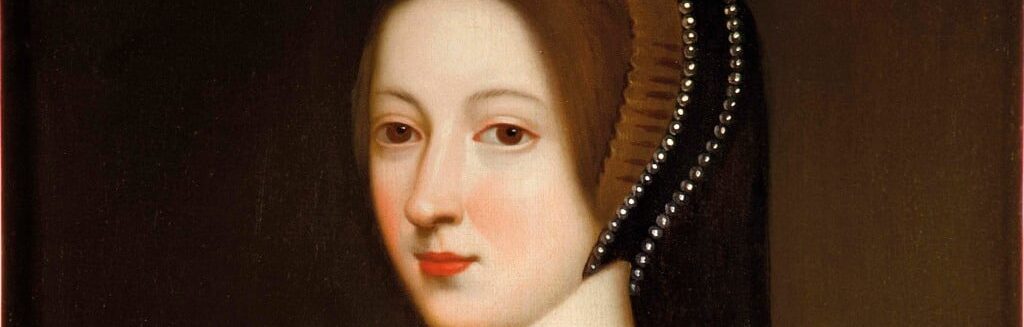
Anne Boleyn at the Tower of London: Immersive Audio Walk
Discover how the Tower of London shaped the life of one of Tudor England's most infamous women – from coronation to execution – with Cobble's immersive audio walk.
From her spectacular 1533 coronation to her execution three years later, Anne Boleyn and her life at the Tower of London is one of history’s most dramatic falls from grace. While most Tower of London tours focus on the chapel where she’s buried or Tower Green where she was executed, Cobble’s immersive audio walk takes you to the hidden locations where Anne Boleyn’s life story actually unfolded. See the Queen’s Stairs where she arrived as prisoner, the tower entrance where Henry VIII greeted her as his new bride and queen, and the riverside where her extravagant...
more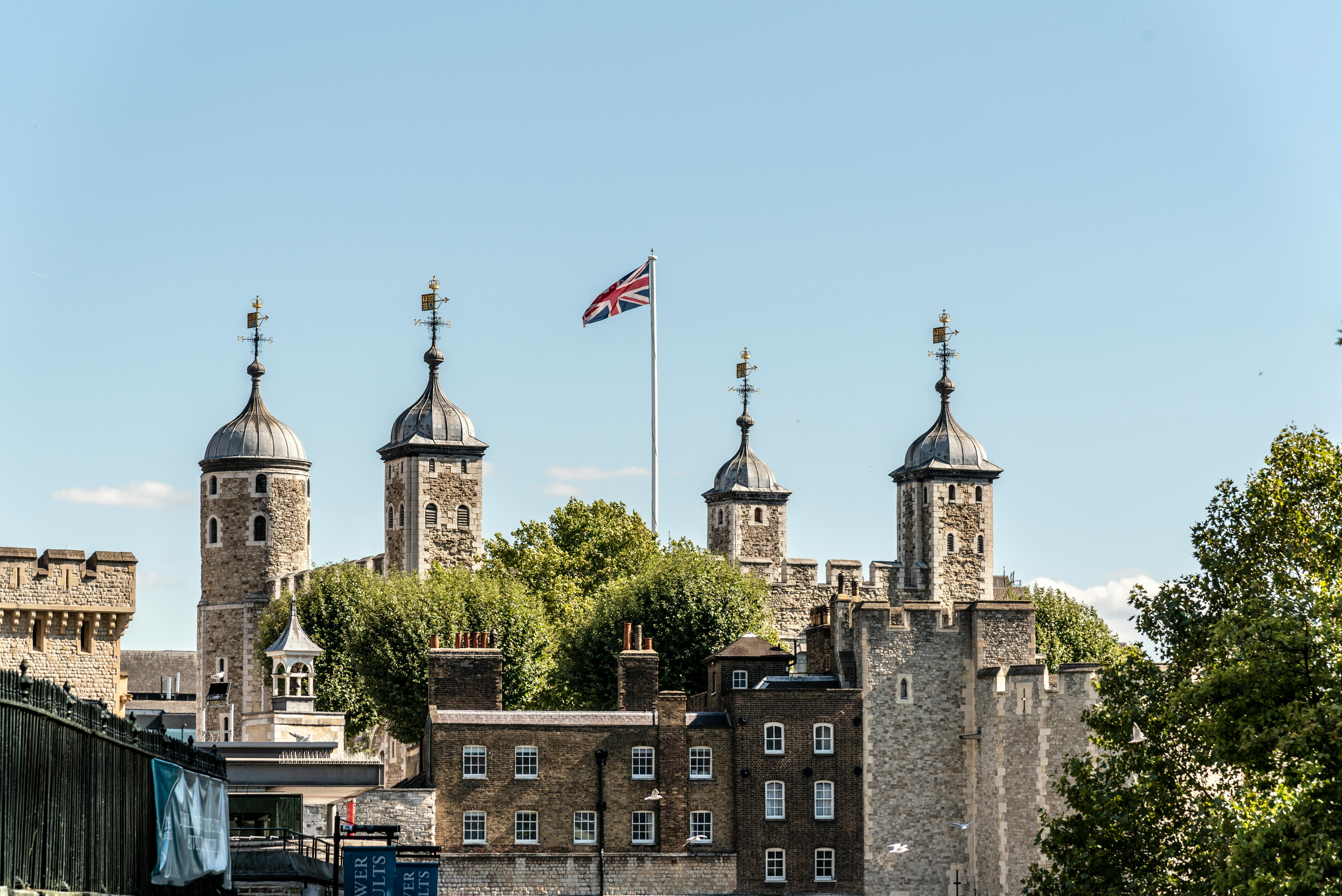
Tower of London Audio Walk: Tudor History Tour for £9.99
See tucked-away stairs where queens arrived by barge, spot the unassuming memorial marking 125 executions, and look out for forgotten entrances that witnessed England's most dramatic royal moments on Cobble's Tudor Tower of London walk.
Looking for things to do at the Tower of London beyond the standard visit? While the Tower’s official audio guide covers the standard stories inside the fortress walls, Cobble’s Tudor Tower of London audio walk takes you to the hidden sites most visitors miss. See tucked-away stairs where queens arrived by barge, spot the unassuming memorial marking 125 executions, and look out for forgotten entrances that witnessed England’s most dramatic royal moments. At £9.99 for 50 minutes of immersive storytelling, it reveals the overlooked Tudor sites you’ll easily walk past...
more
A Different Way To Explore London: Discover the City’s Hidden History Through Audio
Why Cobble is the best app for tourists in London who want expert-led storytelling, immersive sound, and total freedom to explore at their own pace.
Looking for a way to explore London that goes beyond the guidebooks and crowded tours? Meet Cobble – a mobile app that brings the city’s rich, dramatic history to life through immersive, GPS-triggered audio stories. Unlike traditional walking tours, Cobble puts you in control. You decide where to go, when to pause, and which parts of the city to explore. Whether you’re strolling through Soho and spot a record shop you want to check out, or wandering around Bloomsbury when a sudden rain shower hits, Cobble fits seamlessly into your plans. But it’s not just about...
more