
London History, Up Close
Blogs inspired by Cobble's audio walks
The Raymond Revuebar: Soho’s World Centre of Erotic Entertainment
From 1958 to 2004, the Raymond Revuebar operated in Soho. Paul Raymond called it the World Centre of Erotic Entertainment.
If you look up at the building to the right of Soho’s Original Adult Store on Walker’s Court, you can still make out the old sign built into the brickwork: “the world’s greatest names in Strip Tease.” It is all that remains of the Raymond Revuebar, which from 1958 to 2004 operated at this address under its self-proclaimed title of “The World Centre of Erotic Entertainment.” The Revuebar was many things – ludicrous, audacious,...
more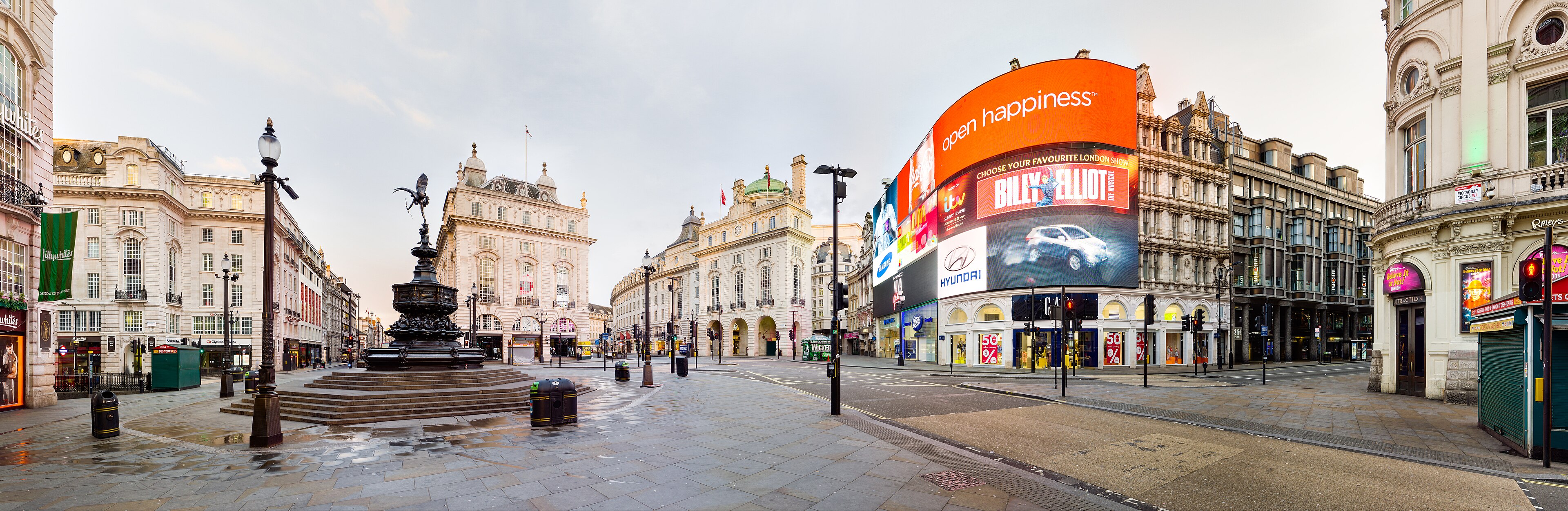
The Wrong God at Piccadilly Circus
Everyone calls it the Eros statue. It isn't. The figure at Piccadilly Circus is actually Anteros, and the artist who made it wanted it demolished.
Everyone calls it the Eros statue. It is not Eros. It never was. The winged figure at the centre of Piccadilly Circus is Anteros: Eros’s brother, a symbol of selfless and mature love rather than reckless passion. The mix-up has persisted for over 130 years, and at this point nobody is correcting it. London looked at a statue of measured, reflective affection and decided it was the god of getting off with people. Not What You Think The Shaftesbury Memorial Fountain went up on 29...
moreThe Tower of London’s Ravens: A Very Victorian Myth
The Tower's ravens have guarded the fortress for centuries, or so the (invented) legend goes...
Ravens at the Tower of London. The raven enclosure sits within the Tower of London’s inner ward, a short walk from the White Tower. Six ravens live here at any given time, tended by a keeper with the title of Ravenmaster. Tourists photograph them. Tour guides invoke them. The legend is everywhere: if the ravens ever leave the Tower, both the fortress and the kingdom will fall. King Charles II was so alarmed by the prophecy that he ordered the birds protected, even at the expense of his...
moreThe Man Who Tried to Steal the Crown Jewels
In 1671, Thomas Blood tried to steal the Crown Jewels from the Tower of London. He dressed as a parson, nearly pulled it off, and the king pardoned him.
The Martin Tower at the Tower of London. The Martin Tower is not the Tower of London’s most impressive structure. It is squat and circular, 39 feet high, built from Kentish ragstone in the 1230s. For most of its history it served as a storage room, a prison, and a set of lodgings. For 172 years, it also held the Crown Jewels of England. On the morning of 9 May 1671, it came within nine minutes of losing them. A New Set of Jewels for a New King The Crown Jewels that Thomas...
moreThe Peasants’ Revolt and the Tower of London: Farm Tools Beat a Fortress
In 1381, 10,000 rebels breached the Tower of London with farm tools. The guards let them in. A 14-year-old king rode out alone to face them.
The outer walls of the Tower of London were built to be impregnable. Edward I spent the equivalent of over £11 million today transforming the fortress into the strongest castle in England. Successive kings reinforced its walls, deepened its moat, and multiplied its towers. The Tower had never fallen. It would not fall to an army. As it turned out, all it took was an open gate and a distracted teenager. On 14 June 1381, the Peasants’ Revolt breached it anyway. Not with siege...
moreNine Days a Queen: Lady Jane Grey and the Tower of London
Lady Jane Grey was queen for 9 days. She spent the next 7 months in the Tower of London waiting to find out if she would live.
Inside the Beauchamp Tower, scratched low into the stone at knee height, is a single name: JANE. Someone carved it during the winter of 1553-54, probably Guildford Dudley, Jane Grey’s teenage husband, imprisoned here after his wife’s nine-day reign collapsed. It is not an inscription that announces itself. You have to know to look for it. The Tower of London is full of such traces – moments of desperation preserved in stone by people who had run out of other options. Few...
moreThe Bishop, the Rope, and the First Escape from the Tower of London
In 1101, the Tower of London's first prisoner escaped through a window, using a rope hidden in a wine barrel.
The White Tower is the oldest and most imposing structure in the Tower of London complex. William the Conqueror built it in the late 1070s – a vast stone cube with four corner turrets, designed to loom over London’s low skyline. The message was unambiguous: there was a new king, and dissent would not be tolerated. For the first decades of its existence it was simply called the Great Tower, and it stood alone. The sprawling complex of walls, towers, and gatehouses that surrounds it...
moreFor Bread and for Scotland: The Jacobite Executions on Tower Hill, 1746
On Tower Hill in 1746, one man died for bread and one died for Scotland. Two public executions on one day left two very different legacies.
The memorial in Trinity Gardens on Tower Hill sits on the approximate site of the old scaffold. Bronze plaques set into the ground record 27 names – politicians, nobles, rebels, and traitors who died here publicly, in front of crowds that sometimes numbered in the thousands. A central plaque notes that more than 125 people lost their lives on this spot “for the sake of their faith, country or ideals.” The 27 names represent only a fraction. Most who died here went...
moreSt Paul’s Cathedral in the Blitz: One Photograph, Two Front Pages
Herbert Mason's famous photograph of St Paul's Cathedral during the Blitz ran on two front pages, with opposite meanings.
Herbert Mason’s famous photo of St Paul’s in the Blitz. The south face of St Paul’s Cathedral looks out over St Paul’s Churchyard, the pedestrianised square that wraps around the building’s base. Christopher Wren’s dome rises above it. Look up at the triangular pediment on this side of the building and you’ll find a carved phoenix, wings spread, rising from flames. Beneath it, a single Latin word: Resurgam. I shall rise again. It...
more‘I Will Rise Again’: How London Kept Rebuilding St Paul’s Cathedral
Old St Paul's Cathedral burned, was struck by lightning, and had horses in its nave. The story of five cathedrals on one Ludgate Hill site.
St Paul’s Cathedral has a fire-filled history. Ludgate Hill rises gently from the heart of the City of London towards the west facade of St Paul’s Cathedral, the steps spilling down from the portico onto the churchyard below. The stone is worn smooth in places. Tourists cluster around the base of the steps. Office workers cut through on their lunch breaks. It looks, on most days, like a building that has always been here and always will be. That impression is not entirely wrong....
more