
London History, Up Close
Blogs inspired by Cobble's audio walks
The Fascists Upstairs: Mussolini’s Party in the Heart of Soho
In 1932, Mussolini's Fascist Party set up its London headquarters above a waiters' cooperative on Greek Street.
In the 1930s, the second floor of a waiters’ cooperative on Greek Street housed the London headquarters of Mussolini’s Fascist Party. Downstairs, Italian waiters clocked in and out. Upstairs, the Fascio di Londra distributed propaganda, organised the community, and plotted to take over Soho’s café industry. The espresso machines kept hissing. Nobody talked about the second floor. Little Italy’s Secret Soho was the heart of London’s Italian community: some...
moreWilliam Blake – ‘An Unfortunate Lunatic’ in Soho?
William Blake was born above a hosiery shop on Broadwick Street in 1757. He saw visions, survived the Gordon Riots, and held an exhibition nobody attended.
Broadwick Street runs through the middle of Soho, lined with the usual modern mix of offices and restaurants. William Blake House now stands at Number 62, a sixteen-storey tower block erected in the 1960s after the original building was demolished. A plaque at the entrance to the block and a note at nearby Marshall Street are all that mark the spot. It is not much of a memorial for the man the building is named after, the prolific artist and writer of Jerusalem. He was born here on the 28th...
moreGod, Guilt, and the Streets of Soho: William Gladstone’s Secret Life
William Gladstone spent evenings rescuing Soho prostitutes, flogging himself in penance, and being blackmailed for a job at Inland Revenue.
William Gladstone was Prime Minister four times, a towering Victorian moralist, and a man who spent his evenings walking the streets of Soho and Covent Garden persuading prostitutes to come home with him. His wife Catherine would give them a meal, some advice, and a bed for the night. The bed, it should be clarified, was not to be shared. Gladstone kept meticulous records of every encounter in his diary, using a small symbol of a whip to mark the occasions when he felt he had become...
moreThe Raymond Revuebar: Soho’s World Centre of Erotic Entertainment
From 1958 to 2004, the Raymond Revuebar operated in Soho. Paul Raymond called it the World Centre of Erotic Entertainment.
If you look up at the building to the right of Soho’s Original Adult Store on Walker’s Court, you can still make out the old sign built into the brickwork: “the world’s greatest names in Strip Tease.” It is all that remains of the Raymond Revuebar, which from 1958 to 2004 operated at this address under its self-proclaimed title of “The World Centre of Erotic Entertainment.” The Revuebar was many things – ludicrous, audacious,...
more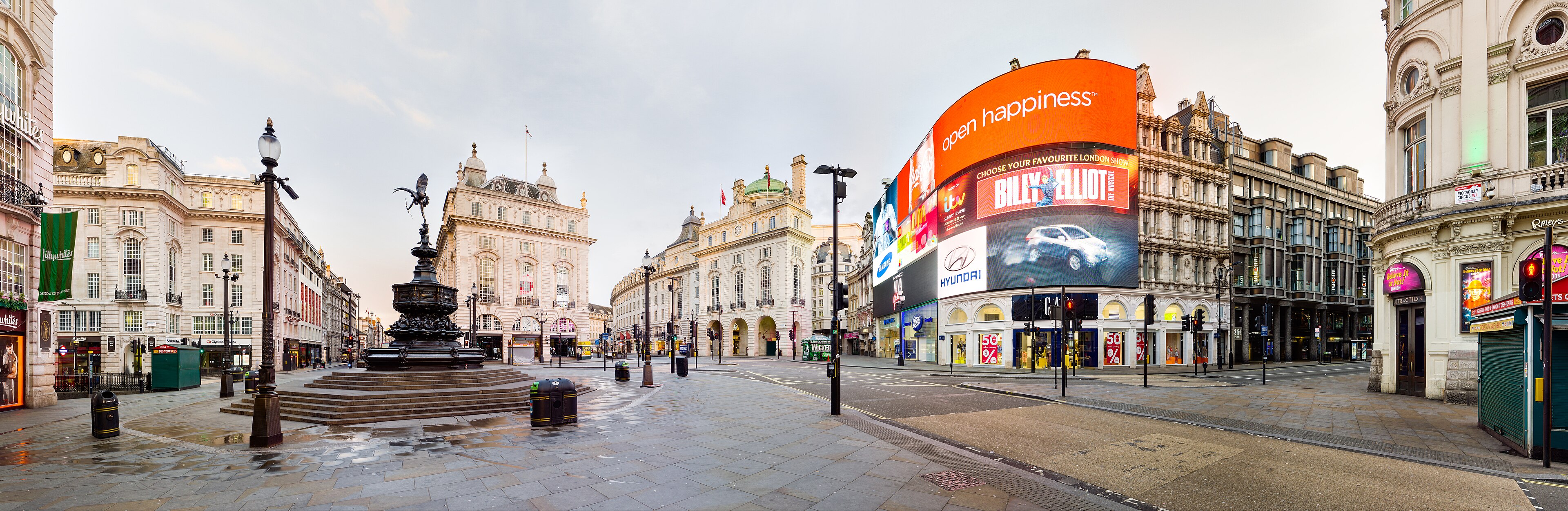
The Wrong God at Piccadilly Circus
Everyone calls it the Eros statue. It isn't. The figure at Piccadilly Circus is actually Anteros, and the artist who made it wanted it demolished.
Everyone calls it the Eros statue. It is not Eros. It never was. The winged figure at the centre of Piccadilly Circus is Anteros: Eros’s brother, a symbol of selfless and mature love rather than reckless passion. The mix-up has persisted for over 130 years, and at this point nobody is correcting it. London looked at a statue of measured, reflective affection and decided it was the god of getting off with people. Not What You Think The Shaftesbury Memorial Fountain went up on 29...
more‘Who’s That Rare and Radiant Maiden?’ – The Short Life of Nelly Moore
In 1869, Soho Square lost one of its most remarkable residents. Nelly Moore, one of the most promising actresses of her generation, was just 24 years old.
Soho Square sits at the northern end of Soho, a small public garden ringed by Georgian and Victorian buildings. Number 31 is hard to find today. It should be in the square’s South West corner, but there’s a gap – or rather a road: Frith Street – between 32 and 30, the NHS building that was formerly the home of celebrated Victorian actress Fanny Kemble. 31 was the abode of another Victorian actress. The actress Nelly Moore lived there in the 1860s. Beautiful and talented,...
more‘Anti-Espresso’ and Anti-Nuclear: the Partisan Coffee House
A coffee house on Carlisle Street in Soho was the intellectual centre of the British New Left, and a regular haunt of Special Branch.
Soho in 1960 At some point in the late 1950s, officers from Special Branch began making regular visits to a coffee house on Carlisle Street, a narrow turning off Soho Square. They would sit down, order a drink, and play chess. They were listening. The conversations happening at number 7 were considered worth monitoring at the highest levels of the British state. The place was called the Partisan Coffee House. It was open from half past ten in the morning until midnight, it served famously...
moreJuliet at Twenty, Abolitionist at Fifty: The Extraordinary Life of Fanny Kemble
Fanny Kemble saved Covent Garden Theatre from bankruptcy in 1829, then spent decades fighting to publish her devastating account of slavery.
Number 29 Soho Square sits on the north side of the square, a few minutes’ walk from the noise and colour of Oxford Street. These days it’s an NHS walk in centre, and has been in the medical game for a while. A large engraving on the top of the building reads ‘The Hospital For Women, Supported By Voluntary Contributions‘. Before that part of its history though, this site housed a woman whose own voluntary contributions provided a form of support to a large...
more